 Focus Eco Center
What we do
Our projects
Local initiatives and international cooperation for nature, communities and a more sustainable future.
Inclusive Future
Inclusive Future is a transformative initiative aimed at integrating sustainability competences into education while fostering inclusive learning environments. This project, co-funded by the Erasmus+ Programme, addresses the urgent need for sustainable education by equipping students and educators with the skills and knowledge necessary to navigate today’s environmental, social, and economic challenges.
COHERENT – Circle of Youth for the Europe We Want
Young people actively shaping Europe’s future.

NABI – Nature-Based Innovations for Urban Forest and Rainwater Management
Nature-based innovations for urban forests and rainwater management.

Towards a climate-neutral EU: efficient allocation of EU funds
A professional programme supporting transparent and sustainable use of EU funds.
Change the power – (em)power to change
A European programme connecting the future of energy, sustainable lifestyles and opportunities for local communities to act.
EYD2015: The future we want
A programme connecting the global challenges of the European Year for Development with local discussion and action.
Green Entrepreneurship Europe – GEE
Supporting green entrepreneurial skills and new community initiatives.

Back to Nature
A programme combining environmental education and experiential learning in nature for pupils aged 9–11 and their teachers.
Millennium Development Goals
An awareness programme exploring the relationship between the Millennium Development Goals and local responsibility.
Lessons from Nature
A learning programme that treats nature as a mentor, building experiential education on cycles, diversity and adaptation.
Salt Way
A Greenway of more than fifty kilometres connecting the salt baths of Marosszentgyörgy with the Praid Salt Mine and the communities in between.
People4Soil
A European initiative to protect soil and recognise its importance to society.
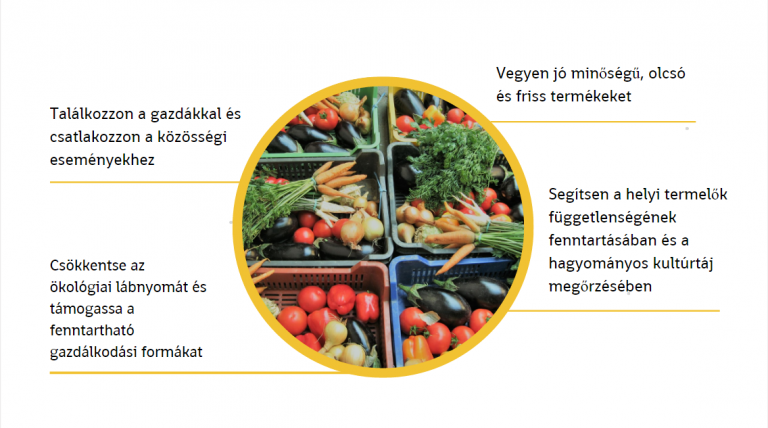
Webkamra
A system connecting local producers and urban customers through monthly markets, pre-orders and weekly vegetable baskets.
ASSET, Assistance for Skilled Environmental Teaching
ASSET, Assistance for Skilled Environmental Teaching The aim of the project is to support teachers in improving their skills in the field of climate education by providing them with a series of innovative methodological
ClimateFair Monitor: Towards climate-neutral buildings and road transport
The decarbonisation of buildings and road transport (DBRT) is high on the EU’s agenda. Two powerful tools, the extension of the EU Emissions Trading System to cover these sectors (ETS2) and the Social Climate Fund (SCF) are expected to greatly contribute to this aim. These measures are closely related to households’ daily life, making them socially sensitive and prone to be used by climate deniers to undermine the EU’s climate policies.
ECEAT
2017 has been designated by the World Tourism Organization as the International Year of Sustainable Tourism for Development. Yet the idea of a sustainable tourism both benefiting to local communities and promoting cultural values and natural landscapes is not new.
Towards a climate-neutral EU: funding and incentives for a transformative European Green Deal and Recovery Plan
European Environmental Bureau and Clean Air Action Group (Levegő Munkacsoport) started a new project in October 2020 with the participation of CEEWeb (membership across CEE), Economic Policy Institute (BG), Centre for Transport and Energy (CZ), Green Liberty (LV), Polish Green Network (PL), Focus Eco Center (RO), Umanotera (SI) and Centre for Sustainable Alternatives (SK). The project is supported by the German Federal Ministry for the Environment, Nature Conservation and Nuclear Safety (BMU). This project aims to have an impact on the Multiannual Financial Framework (MFF), i.e. the EU budget for the period 2021–2027) and the Recovery and Resilience Facility by providing inputs to policy process work, exchanging views, increasing awareness on the necessity of making this EU budget climate-proof and developing targeted recommendations for improving the use of EU funds.