 Focus Eco Center
Principles for successful EU-funded projects
Others
Principles for successful EU-funded projects
Presentation of best practices
INTRODUCTION
The EU supports public investment and a wide range of projects through the Cohesion Fund, the European Agricultural Fund for Rural Development, the European Regional Development Fund, the European Social Fund, the LIFE programme and the Recovery and Resilience Facility. As a funder, it has a responsibility to ensure that these resources serve their stated purposes. Used well, they can advance sustainable development and Europe’s goal of climate neutrality by 2050. Monitoring their use and ensuring transparency, however, can be difficult.
Focus Eco Center works with other civil society organisations to examine how EU funds are spent. We have reviewed many projects; our findings are available in the best-practice database. Positive examples can guide municipalities and regions, while cases in which spending conflicts with a project’s aims also deserve attention. These lessons can inform EU guidance, national funding calls and the work of beneficiaries.
Our recommendations aim to strengthen trust between project organisations and their communities. Managing grants and monitoring implementation require expertise. Alongside mistakes to avoid, we therefore set out practical ways to make EU-funded projects in Central and Eastern Europe more successful.
1. Public involvement: Local communities must be actively involved in EU-funded projects
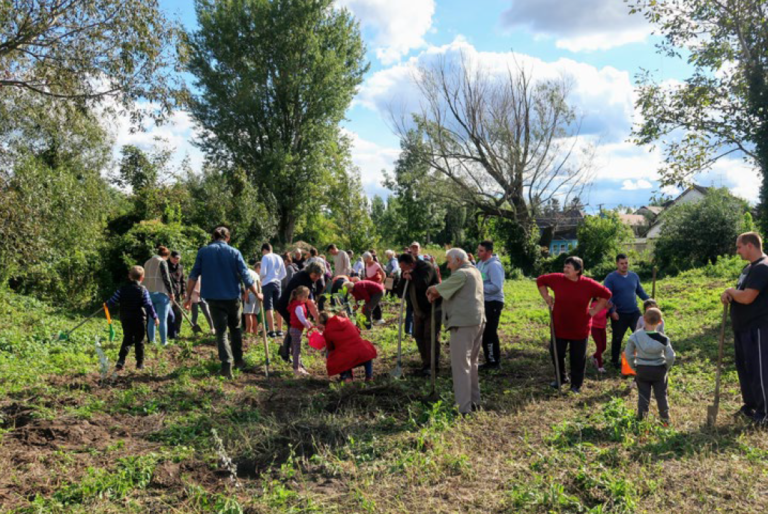
Projects that directly involve citizens are more likely to succeed. Social and environmental goals were more often achieved in projects that included greater citizen participation.
A. Local involvement can bring in new and different social actors to make a difference. The projects “Waste Management in Vsetín” and “Smart Waste Management System in Šitbořice” aimed to raise awareness of waste management among various stakeholders in two municipalities in the Czech Republic, including schools, private actors and citizens. In this way, they were able to reduce the volume of municipal waste and share best practices among the whole community.
B. Participatory planning projects can shape more livable spaces. In Trnava, Slovakia, the revitalization of the Agátka housing estate was carried out following an outstanding example of a participatory planning process. It allowed citizens to express their suggestions by attending public meetings and providing input through special questionnaires, the results of which were even included in the public call documents. In this way, several climate change adaptation and stormwater management measures were included in the final design, including a 250-meter-long stream, a community garden, wooden play elements and other green elements.
C. More participatory projects better reach and help people in need. “Solar Powered E-mobility for the elderly, managed by a local energy cooperative and the municipality” highlighted how a simple but energy-efficient transport service could help the elderly enjoy clean transport in Loški Potok, Slovenia. Another good example from Slovenia was provided by Zero500: subsidizing measures to reduce energy consumption in 500 low-income households to solve the problem of energy poverty. The grants that were co-financed from the Cohesion Fund covered 100% of investments in thermal insulation, energy efficient installations and water heating systems for energy poor residents. This project highlighted the potential of renovation to combat energy poverty.
2. Local administrative capacity: good projects work hand in hand with local administration
EU-funded projects benefit not only from citizen ownership, but also from regional and local administrations. Inter-institutional support can lead to a more efficient use of EU funds, and the realization of projects that might otherwise be postponed, blocked or have only a short-term effect.
A. Institutions can cooperate with each other in order to achieve national objectives. Poland’s “National Administration Support for Climate Change Adaptation in Cities” involved the Ministry of the Environment in the preparation of municipal adaptation plans for the 44 cities participating in the project and initiated similar activities at the local level. Cities and other local authorities benefited from external expertise and developed a final document to help them manage the process of adapting to climate change.
B. Regional centers can provide a platform for the exchange of knowledge and best practices. The “Regional Energy Centres” (ERCs) in Slovakia are a good example: they will support the implementation of national climate and energy targets at regional and local level in 2024-2029. RCUEs will also provide low-carbon strategies and support local administrations within sub-regions through technical assistance and transfer of experience.
C. Knowledge sharing between municipalities can lead to successful outcomes. A good example is provided by the “Life Logos 4 Waters: In Cooperation for Climate-Conscious River Basin Management” project, which coordinated water management and retention programs in several Hungarian municipalities to better address common problems by disseminating more natural water retention measures at the basin level. Consequently, municipal decision support systems could increase their capacity to access and manage national and European funds.
3. Save energy first: building renovation and heating from renewable sources as priorities
Renovating buildings, making them energy efficient and heating them from renewable sources must go hand in hand. The EU has set a target to reduce greenhouse gas emissions from buildings by at least 60% by 2030. If managed properly, EU-funded projects can contribute to a successful energy transition by increasing access to clean energy and infrastructure.
A. Awareness of energy saving measures. REnoHub: One-Stop Shops Boosting Energy Efficiency Renovation of Residential Buildings provided information centers and hubs in Hungary to better communicate appropriate investments in private buildings. Residents were provided with information on energy renovation, as well as individual assessments and technical advice.
B. The involvement of private actors in building renovation must be strictly focused on climate change objectives to avoid costly giveaways to home owners. A good example of this is the “Energy Service Contract (ESCO) of Public Buildings in the Capital City of Ljubljana”, in Slovenia. In this case, two companies carried out an energy upgrade of 48 public buildings (schools, sports halls, municipal buildings and others), using an energy performance contract model.
C. Rehabilitating public schools can sensitize new generations to the benefits of sustainable solutions. “Increasing the energy efficiency of a high school building in Negrești-Oaș” in Romania ensured the thermal insulation of a school, a new heating system and the renewal of the electrical network. Annual non-renewable energy consumption and greenhouse gas emissions were reduced by 87% and 67%, respectively. Two other good examples in this regard came from the Czech Republic. “An energy-efficient kindergarten in Sedlejov” was built to a passive standard with minimal energy consumption and equipped with heat pumps, ventilation systems with heat recovery and retention tanks for collecting rainwater. The elementary school in Psàry, the first passive energy school in the Czech Republic, has been fitted with a design that relies on natural light, insulation and ventilation to regulate its temperature. In addition, the inclusion of a community center and gym encouraged the connection between citizens and this highly energy-efficient building, allowing more people to get to know it and enjoy its benefits.
4. Adaptation to climate change: EU-funded projects should be resilient and adapted to climate change.
EU-funded projects must take into account rapid climate change to withstand possible negative effects and deliver long-term benefits. More climate-friendly solutions can only be achieved in projects that demonstrate proper attention to nature and the environment.
A. Promoting blue infrastructure can create local cooling points. A water retention pond in the city of Warsaw, Poland, was an outstanding example of this. Due to the frequent flooding of a local river, a defunct pond was revitalized and expanded with the help of EU regional funds. Ultimately, the project included a park for citizens, feeding and breeding areas for migratory birds, and a water turbine to generate electricity.
B. Green spaces can reduce urban heat islands. The project “Green Lungs of the City – Revitalization of Úspech Trenčín Park”, Slovakia, revitalized urban elements and green infrastructure in a local park, improving the resilience of the built environment to the negative effects of climate change and reducing the urban heat island effect. Another example is Climate Resilient Cities – greening and shading the pedestrian walkway on Starohájská Street in Trnava, Slovakia. This project consisted of building a series of shade structures, climbing vegetation and boardwalks to help residents move around during periods of intense heat.
C. Other climate change adaptation measures in urban environments attempt to cope with periods of rainfall (through the use of rain gardens, permeable pavements and by minimizing the surface covered by asphalt). These measures reduce vulnerability and increase adaptive capacity to the impact of extreme rainfall. The project “Life in runoff – urban climate adaptation in the field of rainfall management in Budapest”, Hungary, demonstrated that a proper assessment can identify stormwater management intervention points in different neighborhoods of the city, sharing them with several stakeholders. In this way, rainwater could become an asset for the whole community.
5. Public transport: transport projects must promote zero-emission solutions
The transition to a zero-emission transport system has become a global imperative. We have identified several best practices that focus on providing financial support for infrastructure that promotes a transition to more environmentally and socially responsible modes of transport.
A. Investments in the electrification of public transport are a major issue in several EU countries. In the Czech Republic, railway electrification is part of a wider strategy: this includes investing in the electrification and security of buildings and railway lines by deploying EU funds across the country. Traction power is also provided in the substations to ensure the capacity to handle an increased volume of rail traffic. Another good example comes from the expansion of the metro network in Sofia, Bulgaria, which will make an important contribution to reducing air pollution and traffic congestion in the city. The newly constructed section is expected to carry approximately 25,000 – 30,000 additional passengers per day initially, which is expected to increase rapidly to 45,000 passengers.
B. It is better to invest in fleets of electric city buses than in private electric cars. The project of the municipality of Vratsa to modernize urban transport and improve air quality in Bulgaria did not only include new electric buses and trolleybuses, but developed an entire strategy to increase the share of public transport users. In addition, a proper cost-benefit analysis and scientific calculations based on the FPH10 indicators gave this project an impetus to achieve its ambitious goals. Another good example is the local public transport infrastructure in the municipality of Târgu Mureș in Romania. This project reduced the use of private cars through a new urban mobility plan that included a brand new low-impact public transport system. The renewal of the green bus vehicles was co-financed by the European Regional Development Fund.
C. Active transportation options and infrastructure for pedestrians and cyclists can encourage people to make more sustainable choices. In this sense, three remarkable cases come from Slovakia. The project “Increasing urban mobility by building a bicycle infrastructure network in Trenčín” implemented a network of interconnected bicycle paths to connect the city’s neighborhoods with neighboring municipalities. Bicycle racks for schools – Promoting cycling in schools and the Automated Bicycle Parking House at Trnava Station, increased the bicycle parking capacity to make cycling a habit for future generations and to promote hybrid transport solutions.
6) Mistakes to avoid: incorrect practices from which we can learn
Our main objective in this paper is to highlight success factors and provide examples of good practice. However, it is difficult to avoid highlighting some of the most common problems in EU-funded projects. These points should serve to underline the importance of the success factors I have described above.
A. Projects without clear benefits for society received EU funds. In Hungary, for example, several lawsuits have been filed against investments near Lake Balaton, Fertő-tó and Öreg. This ecosystem has been repeatedly affected by the construction of a hotel planned by a subsidiary of the Hell Energy Company, a producer of profitable energy drinks. This business received more than €30 million in EU funds over nine years, including the construction of an industrial park on a 50-hectare vacant lot. Some projects have even been given “priority investment” status, making both public participation and oversight by independent authorities nearly impossible. Another case involved the construction of a water park and the expansion of Vazrazhdane Park in Sofia, Bulgaria. The project was announced to complement urban renewal and development measures in an integrated and sustainable way. However, a similar outdoor installation, in a city known for its harsh climate and low air quality standards, could not meet the objectives pursued by the project and failed to generate a positive impact.
B. Some projects were closed, although several parts were not completed as planned. In Hungary, a dysfunctional and oversized rainwater tank built in an unsuitable protected area using unsafe materials in Zsombó was funded despite signs of local corruption. The project was closed, although the dam built was not able to hold back the water. The extracted soil still lies abandoned in the middle of the designated work area. It should not be possible to end a project if several parts of it are not completed according to plan. If criminal charges are proven, public funds should be withdrawn and costs borne by the responsible legal entity.
C. Lack of awareness and adequate communication with local communities can jeopardize the climate-related objectives of EU-funded projects. The modernization and development of sustainable urban transport in the Bulgarian city of Stara Zagora saw the implementation of bus lanes on a narrow road, which made the traffic even heavier than before. The project led to public disapproval, with protests helping to raise public awareness of the importance of a healthy environment and wider citizen involvement.
D. As more EU funds are allocated to green solutions, the risk of “greenwashing” increases. In the municipality of Litija in Slovenia, a road infrastructure project and a cycling infrastructure project were combined, and the resulting project was considered “sustainable use of energy” and classified as an investment in “cycling and pedestrian paths”, despite the fact that the project was in fact mainly road resurfacing.
Updates